
Suomalais-Ugrilaisen Seuran Toimituksia — Mémoires de la Société Finno-Ougrienne
Nimeke
Kuvaus
Suomalais-Ugrilaisen Seuran Toimituksia (Mémoires de la Société Finno-Ougrienne) on vuodesta 1890 ilmestynyt kansainvälinen monografiasarja, jossa julkaistaan korkeatasoisia uralilaisiin ja altailaisiin kieliin liittyviä tutkimuksia. Monografioiden lisäksi sarjassa ilmestyy temaattisia artikkelikokoelmia.
Sarjassa ilmestyneet julkaisut perustuvat tyypillisesti empiiriseen tutkimukseen. Keskeisenä kohteena ovat kielet, kieliryhmät ja -yhteisöt, joilla on yhteys perinteiseen kieliekologiseen ympäristöönsä. Julkaistavat kirjat voivat edustaa esimerkiksi seuraavia aihepiirejä:
(i) Uralilaisten kielten perustutkimus.
(ii) Kieliopit ja käsikirjamaiset kokonaisesitykset.
(iii) Uralilaisten ja altailaisten kielten suhde niiden naapurikieliin, erityisesti indoeurooppalaisiin.
(iv) Tutkimushistoria.
(v) Temaattiset ja monitieteiset artikkelikokoelmat.
Julkaisuohjelmaan hyväksytyt kirjat julkaistaan open access -periaatteen mukaisesti avoimesti saatavina sähköisinä versioina.
Sarjalla on kansainvälinen toimitusneuvosto, ja se noudattaa käsikirjoitusten referee-käytäntöä:
• Tieteellisestä julkaisukelpoisuudesta vastaava toimitus pyytää käsikirjoitusta koskevat lausunnot vähintään kahdelta arviointitehtävään kutsutulta henkilöltä.
• Arvioijat ovat toimituksen ulkopuolisia ja arvioitavana olevan käsikirjoituksen suhteen riippumattomia väitelleitä tutkijoita tai muita asiantuntijoita.
• Julkaisija lähettää kopiot asiantuntijalausunnoista käsikirjoituksen kirjoittajille.
• Vertaisarviointiprosessi dokumentoidaan seuraavalla sivulla olevien dokumentointia koskevien vaatimusten mukaisesti: https://tsv.fi/fi/palvelut/tunnus/kayton-edellytykset.
SUST-sarjassa julkaistujen artikkelikokoelmateosten artikkelien kirjoittajilla on oikeus rinnakkaistallentaa työnsä oman yliopistonsa artikkelitietokantaan ilman embargoaikaa. Tähän rinnakkaistallennukseen soveltuu ensisijaisesti Suomalais-Ugrilaisen Seuran kirjoittajalle luovuttama lopullinen PDF-tiedosto. Yliopiston tietokantaan tulevaa artikkelia ei saa muuttaa Suomalais-Ugrilaisen Seuran luovuttamasta PDF-tiedostosta ilman erillistä lupaa. (Muuhun rinnakkaisjulkaisuun ei ole oikeutta.)
Tekijä
Riho Grünthal (päätoimittaja, Helsinki), Marianne Bakró-Nagy (Budapest), Márta Csepregi (Budapest), Ulla-Maija Forsberg (Helsinki), Kaisa Häkkinen (Turku), Gerson Klumpp (Tartto), Johanna Laakso (Wien), Lars-Gunnar Larsson (Uppsala), Matti Miestamo (Helsinki), Sirkka Saarinen (Turku), Elena Skribnik (München), Trond Trosterud (Tromssa), Berhard Wälchli (Tukholma), Jussi Ylikoski (Turku)
Julkaisija
Aikamääre
Identifiointitunnus
Sarjan julkaisut
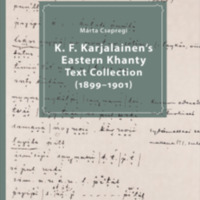
K. F. Karjalainen’s Eastern Khanty Text Collection (1899–1901) (SUST 279)
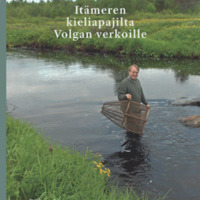
Itämeren kieliapajilta Volgan verkoille: Pühendusteos Riho Grünthalile 22. mail 2024 (SUST 278)
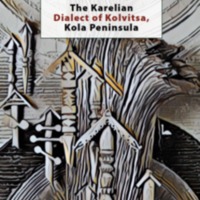
The Karelian Dialect of Kolvitsa, Kola Peninsula (SUST 277)
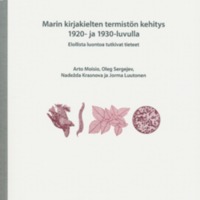
Marin kirjakielten termistön kehitys 1920- ja 1930-luvulla. Elollista luontoa tutkivat tieteet. (SUST 276)
Ёмас сымыӈ нэ̄кве во̄ртур э̄тпост самын патум [Yomas symyn nékve vortur etpost samyn patum]. Scripta miscellanea in honorem Ulla-Maija Forsberg. (SUST 275)
![Ёмас сымыӈ нэ̄кве во̄ртур э̄тпост самын патум [Yomas symyn nékve vortur etpost samyn patum]. Scripta miscellanea in honorem Ulla-Maija Forsberg. (SUST 275)](https://www.sgr.fi/fi/files/square_thumbnails/7e0ca657c42ebeba042675fb9425c949.jpg "Ёмас сымыӈ нэ̄кве во̄ртур э̄тпост самын патум [Yomas symyn nékve vortur etpost samyn patum]. Scripta miscellanea in honorem Ulla-Maija Forsberg. (SUST 275)")
Verba vagantur (SUST 274)
A Grammar of Skolt Saami (SUST 273)
Suomen datiivigenetiivin juuret vertailevan menetelmän valossa (SUST 272)
Mielen laaksot. Mïelen vuemieh. Miela vuomit. Mielâ vyemeh. Miõl vue'm. Neljän saamen kielen paikannimien rakenne, sanasto ja rinnakkaisnimet vähemmistö–enemmistö-suhteiden kuvastajina (SUST 271)
Juuret marin murteissa, latvus yltää Uraliin (SUST 270)
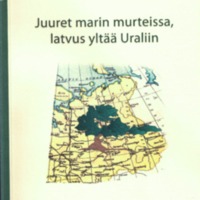
Words and Varieties. Lexical Variation in Saami (SUST 269)
Moksha prosody (SUST 268)
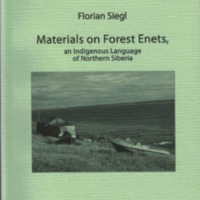
Materials on Forest Enets, an Indigenous Language of Northern Siberia (SUST 267)
A Linguistic Map of Prehistoric Northern Europe (SUST 266)
Networks, Interaction and Emerging Identities in Fennoscandia and Beyond (SUST 265)
Per Urales ad Orientem (SUST 264)
Kuujärven lyydiläistekstejä (SUST 263)
On the Typology of Negation in Ob-Ugric and Samoyedic Languages (SUST 262)
Adnominal Person in the Morphological System of Erzya (SUST 261)
Inarinsaamen käsitemetaforat (SUST 260)
Sanoista kirjakieliin (SUST 259)
The Quasquicentennial of the Finno-Ugrian Society (SUST 258)
Non-finites in North Saami (SUST 257)
Niederdeutsch-finnische Sprachkontakte (SUST 256)
The negation of stative relation clauses in the Mordvin languages (SUST 254)
Sámit, sánit, sátnehámit (SUST 253)
Syrjänische Texte. Band V. Komi-Syrjänisch: Ober-Vyčegda-Dialekt. M. Žikins Texte (SUST 252)
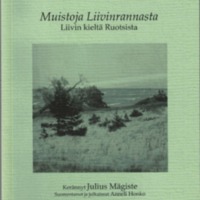
Muistoja Liivinrannasta. Liivin kieltä Ruotsista (SUST 250)
Mokšamordvan murteet (SUST 249)
Network of songs. Individual songs of the Ob' Gulf Nenets: Music and local history as sung by Maria Maksimovna Lapsui (SUST 248)
K. F. Karjalainens südostjakische Textsammlungen. Band III (SUST 247)
Diachronic change in Erzya word stress (SUST 246)
Erzya prosody (SUST 245)
Finnic adpositions and cases in change (SUST 244)
The Chakhar Dialect of Mongol. A Morphological Description (SUST 243)
Early Contacts between Uralic and Indo-European. Linguistic and Archaeological Considerations (SUST 242)
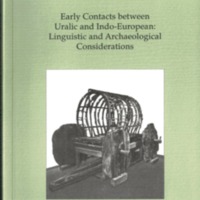
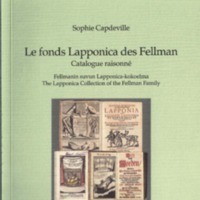
Le fonds Lapponica des Fellman. Catalogue raisonné (SUST 239)
Verba mutuata. Quae vestigia antiquissimi cum Germanis aliisque Indo-Europaeis contactus in linguis Fennicis reliquerint (SUST 237)
Baltisches im Finnischen (SUST 235)
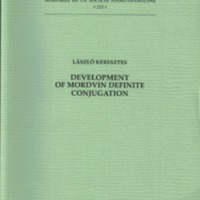
Development of Mordvin definite conjugation (SUST 233)
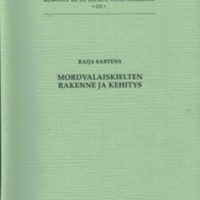
Mordvalaiskielten rakenne ja kehitys (SUST 232)
Toiminnan välttämättömyys ja mahdollisuus. Pohjoissaamen modaalisten ilmausten semantiikkaa ja syntaksia (SUST 231)
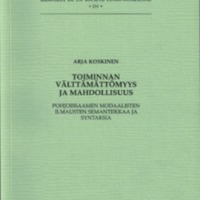
The primary goal of this research is to make a description of the modal field in Northern Saami, restricted to the so-called modality of…
Eteläviron murteen sanaston alkuperä. Itämerensuomalaista etymologiaa (SUST 230)
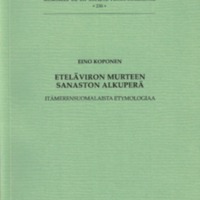
The purpose of this research is to provide an etymological inventory of the vocabulary characteristic of the South Estonian dialect and to shed light on the historical…